The Samsung M80H is part of Samsung’s new M Series in the company’s 2026 TV lineup, offering an entry-level option that combines Mini-LED technology, a high refresh rate, and a broad set of gaming and smart features. Positioned above the Samsung M70H and below Samsung’s Neo QLED Series, including the QN70H and QN80H, the M80H is designed to bridge the gap between Samsung’s basic TVs and its more advanced Neo QLED models.
The Samsung M80H is a 4K LED smart TV available in 55-, 65-, 75-, and 85-inch sizes. It features 144Hz refresh rate support with VRR, HDMI 2.1 bandwidth, Samsung Vision AI, HDR10+, and the NQ4 AI Gen2 Processor. Samsung markets the M80H as a Mini-LED TV, but unlike the company’s higher-end Neo QLED models, it does not have true local dimming. As a result, while it offers an impressive feature set for an entry-level model, its picture quality falls well short of what the Mini-LED branding might suggest.
Samsung M80H Short Review
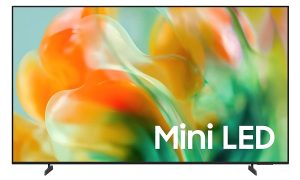
The Samsung M80H uses a 4K LED panel with Samsung’s Mini-LED branding and Supreme Mini LED Dimming technology, powered by the NQ4 AI Gen2 Processor. However, the television does not provide actual local dimming, which is one of the most important advantages normally associated with Mini-LED TVs. Without independent dimming zones, the M80H cannot keep bright highlights isolated from darker areas, resulting in raised blacks and a washed-out appearance in dark scenes. The NQ4 AI Gen2 Processor handles picture processing and AI-based enhancements such as upscaling and picture optimization, but it cannot overcome the fundamental contrast limitations caused by the lack of local dimming. This makes the TV considerably less impressive for dark-room viewing than Samsung’s Neo QLED models.
SDR picture quality is one of the M80H’s stronger areas. The TV delivers great out-of-the-box color accuracy, allowing movies, TV shows, sports, and other standard dynamic range content to look natural without extensive calibration. Samsung also includes features such as 4K AI Upscaling, AI Customization, Color Booster Pro, HDR Brightness Optimizer, Real Depth Enhancer, and Filmmaker Mode to improve the overall viewing experience.
HDR performance is considerably less impressive. Although the M80H supports HDR10+ and Samsung’s Auto HDR Remastering, its peak brightness is relatively low for an LED TV marketed as Mini-LED. Bright HDR highlights lack the intensity found on higher-end Neo QLED models, while the absence of local dimming prevents the TV from producing strong contrast between bright and dark parts of an image. HDR content can therefore appear somewhat flat, particularly in dark scenes where blacks look gray rather than deep.
Motion and gaming are among the most feature-rich aspects of the M80H. The TV supports up to 144Hz, VRR, ALLM, FreeSync Premium, HGiG, Game Motion Plus, Dynamic Black EQ, Super Ultra Wide Game View, and Samsung’s Gaming Hub. All three HDMI inputs support 4K at 144Hz, making the M80H well-equipped for gaming PCs and modern consoles. However, its relatively slow response time can result in noticeable motion blur during fast-moving gameplay, limiting the benefits of its high refresh rate.
Samsung also gives the M80H an extensive smart TV feature set. It runs Tizen, with support for Samsung Vision AI, Bixby, Alexa, SmartThings, Apple AirPlay, Google Cast, Multi View, Samsung TV Plus, Generative Wallpaper, and Live Translate, along with a variety of AI-powered features. The TV also supports AI Soccer Mode, Adaptive Sound+, Active Voice Amplifier, and AI Sound Controller. This makes the M80H considerably more feature-rich than many competing entry-level TVs.
Audio performance is fairly basic. The M80H uses a 2-channel 20W speaker system with OTS Lite, Q-Symphony, Active Voice Amplifier, and Adaptive Sound+. The built-in speakers are suitable for everyday TV viewing and provide clear dialogue, but they lack the bass and immersion of a dedicated soundbar or the more powerful audio systems found on higher-end Samsung TVs.
Overall, the Samsung M80H is a feature-packed entry-level TV rather than a true high-performance Mini-LED television. Its excellent SDR color accuracy, 144Hz refresh rate, HDMI 2.1 support, extensive gaming features, and sophisticated Tizen platform are attractive, but its lack of local dimming, limited HDR brightness, poor reflection handling, and slow response time significantly reduce its picture-quality potential. It is best viewed as a well-equipped entry-level Samsung TV rather than a direct alternative to the company’s Neo QLED models.
| Samsung M80H Prices | |
| 85-Inch (UN85M80HAFXZA) | Check Today’s Price (Amazon.com)… |
| 75-Inch (UN75M80HAFXZA) | Check Today’s Price (Amazon.com)… |
| 65-Inch (UN65M80HAFXZA) | Check Today’s Price (Amazon.com)… |
| 55-Inch (UN55M80HAFXZA) | Check Today’s Price (Amazon.com)… |
Samsung M80H Key Specs
The Samsung M80H brings a surprisingly extensive feature set to Samsung’s entry-level TV category. Its 144Hz refresh rate, HDMI 2.1 bandwidth, VRR support, FreeSync Premium, NQ4 AI Gen2 Processor, HDR10+, and Tizen smart platform give it many features normally associated with more expensive televisions. The table below summarizes the key specifications of the 65-inch Samsung M80H.
| Specification | Details |
| Display Type | LED / Mini LED |
| Resolution | 3840 × 2160 (4K UHD) |
| Screen Sizes | 55″, 65″, 75″, 85″ |
| Screen Size Reviewed | 65″ |
| Refresh Rate | 144Hz refresh rate support with VRR |
| DLG | 240Hz |
| Picture Processor | NQ4 AI Gen2 Processor |
| HDR | Mini LED HDR |
| HDR10+ | Yes |
| Local Dimming | No |
| Micro Dimming | Supreme Mini LED Dimming |
| AI HDR Remastering | Auto HDR Remastering |
| AI Upscaling | 4K AI Upscaling |
| HDR Brightness Optimizer | Yes |
| Color Technology | Pure Spectrum Color |
| Color Enhancement | Color Booster Pro |
| Contrast Enhancement | Real Depth Enhancer |
| Filmmaker Mode | Yes |
| Motion Technology | Motion Xcelerator 144Hz |
| AI Auto Game Mode |
Yes |
| Smart Calibration | Basic |
| Operating System | Tizen Smart TV |
| Samsung Vision AI | Yes |
| Bixby | Yes |
| Alexa | Yes |
| Google Cast | Yes |
| Apple AirPlay | Yes |
| SmartThings | Yes |
| Multi View | Up to 2 videos |
| Generative Wallpaper | Yes |
| Live Translate | Yes |
| AI Soccer Mode | Yes |
| Sound System | 2-channel |
| Sound Output | 20W |
| Object Tracking Sound | OTS Lite |
| Q-Symphony | Yes |
| Active Voice Amplifier | Yes |
| Adaptive Sound | Adaptive Sound+ |
| AI Sound Controller | Yes |
| HDMI Inputs | 3 |
| HDMI Maximum Input | 4K 144Hz |
| HDMI eARC | Yes |
| VRR | Yes |
| ALLM | Yes |
| FreeSync | FreeSync Premium |
| HGiG | Yes |
| Game Motion Plus | Yes |
| Gaming Hub | Yes |
| Dynamic Black EQ | Yes |
| Super Ultra Wide Game View | Yes |
| Wi-Fi | Wi-Fi 5 |
| Bluetooth | 5.3 |
| USB | 1 × USB-A |
| Ethernet | Yes |
| Design | Metal Stream |
| Bezel | 3-Bezel-less |
| Front Color | Black |
| Stand | Basic Feet |
| Price |
Samsung M80H Pros and Cons
Like other entry-level televisions, the Samsung M80H makes several compromises to keep its price and positioning below Samsung’s Neo QLED models. It offers an unusually large number of features for its class, but its picture quality has several important limitations.
✅ Pros
- Excellent SDR color accuracy produces natural and accurate colors straight out of the box.
- 144Hz refresh rate provides smooth motion and supports high-frame-rate PC gaming.
- HDMI 2.1 bandwidth allows all three HDMI inputs to handle 4K at up to 144Hz.
- Extensive gaming features include VRR, ALLM, FreeSync Premium, HGiG, Game Motion Plus, Dynamic Black EQ, and Super Ultra Wide Game View.
- Very low input lag makes the TV responsive when gaming.
- NQ4 AI Gen2 Processor provides advanced picture processing and 4K AI Upscaling.
- Feature-rich Tizen platform offers a wide range of streaming, smart-home, and AI features.
- Samsung Vision AI adds AI-powered picture, sound, and smart functionality.
- HDR10+ support provides dynamic HDR metadata for compatible content.
- Metal Stream design gives the M80H a slim and modern appearance.
- Wide range of sizes makes the M80H available in 55-, 65-, 75-, and 85-inch configurations.
⚠️ Cons
- No true local dimming, despite Samsung marketing the television as a Mini-LED model.
- Low contrast in dark scenes causes blacks to appear gray and washed out.
- Limited HDR brightness prevents HDR highlights from looking especially impactful.
- Poor reflection handling means direct reflections can be distracting in bright rooms.
- Slow response time causes noticeable motion blur during fast gaming.
- Sub-par screen uniformity can affect consistency across the panel.
- No Dolby Vision support, with Samsung relying on HDR10+ instead.
- 20W 2-channel audio system is relatively basic and lacks strong bass.
- Wi-Fi 5 is older than the Wi-Fi 6 or Wi-Fi 6E connectivity found on some competing TVs.
- Mini-LED branding can be misleading, since the TV lacks the local dimming capability normally associated with Mini-LED technology.
Should You Choose the Samsung M80H?
If you’re looking for a feature-rich Samsung TV with a high refresh rate, the Samsung M80H is an interesting entry-level option in the company’s 2026 lineup. Positioned above the Samsung M70H and below the Neo QLED QN70H and QN80H, it combines a 144Hz refresh rate, HDMI 2.1 connectivity, VRR, FreeSync Premium, and Samsung’s extensive Tizen smart platform. Its excellent out-of-the-box SDR color accuracy also makes it a good choice for everyday TV viewing, particularly if you primarily watch standard dynamic range content.
The M80H is less convincing for viewers who prioritize premium picture quality and HDR performance. Despite its Mini-LED branding, it doesn’t have true local dimming, which significantly limits contrast and black levels. Its relatively low HDR brightness and poor reflection handling further reduce its performance in challenging viewing environments. While the 144Hz panel and extensive gaming features are attractive, the TV’s slower response time can also result in noticeable motion blur during fast-paced gameplay. If picture quality is the priority, stepping up to the Neo QLED QN70H or QN80H is likely to provide a more substantial improvement.
Verdict: The Samsung M80H is a solid entry-level Samsung TV for buyers who value gaming features, smart functionality, and accurate SDR performance, but it isn’t the best choice for those expecting premium Mini-LED picture quality. Its lack of local dimming, limited HDR brightness, poor reflection handling, and motion blur keep it firmly below Samsung’s Neo QLED models. For a well-equipped everyday TV, the M80H is worth considering, but buyers seeking stronger contrast and HDR performance should look toward the QN70H or QN80H.
| Samsung M80H Prices | |
| 85-Inch (UN85M80HAFXZA) | Check Today’s Price (Amazon.com)… |
| 75-Inch (UN75M80HAFXZA) | Check Today’s Price (Amazon.com)… |
| 65-Inch (UN65M80HAFXZA) | Check Today’s Price (Amazon.com)… |
| 55-Inch (UN55M80HAFXZA) | Check Today’s Price (Amazon.com)… |
[…] below the Samsung M80H, the M70H also sits below Samsung’s higher-end Neo QLED models such as the QN70H and QN80H in […]
[…] and smart TV features at the entry level. Positioned below models such as the Samsung M70H and M80H, the U8000H is designed for buyers who want a basic Samsung TV without paying for the more advanced […]